
Podcast: Play in new window | Download (Duration: 17:52 — 26.2MB)
Subscribe: Apple Podcasts | Android | RSS
Quick answer: Greenville, Michigan, established as a village in 1867, was named in honor of the John Green family who settled in 1844. Known as a significant potato shipping center, annually sending out 1.5 million bushels, the city also celebrates its Danish immigrant heritage with a festival. Today, Greenville is Montcalm County’s largest municipality, with its history preserved by the Flat River Historical Society.
Key Takeaways
- Greenville, Michigan, was named after the John Green family, who settled there in June 1844.
- The city became an official village in March 1867 after approval from the Michigan State Legislature.
- Greenville was a major potato shipping center, with locals claiming 1.5 million bushels shipped annually.
- Danish immigrants significantly contributed to the community, and their heritage is celebrated with an annual festival.
- The Flat River Historical Society, organized in 1967, preserves the history of Greenville and the Montcalm County area.
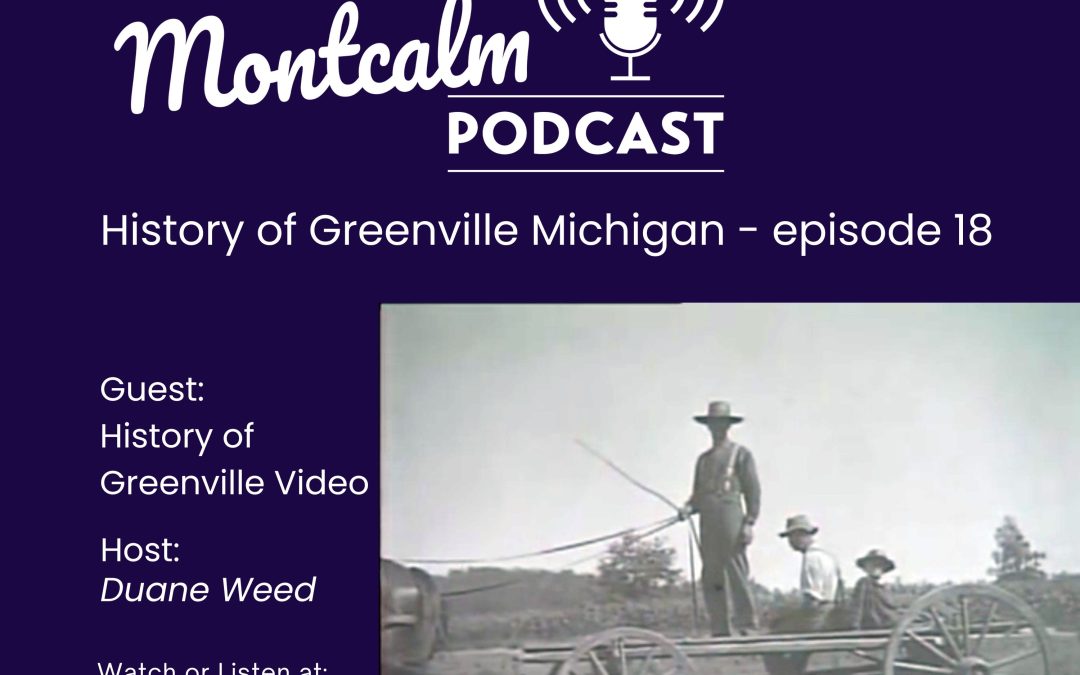
The History of Greenville Michigan – episode 18
Greenville was platted in 1853 and became an official village with its own government in March 1867 when the Michigan State Legislature approved its charter. The area designated as the village included all of Sections 9 and 10 and Rutan’s holdings south of Washington Street, all in Eureka Township.
Today Greenville, At 6.34 square miles (*2010), Greenville is Montcalm County’s largest municipality.
The Flat River Historical Society was organized in 1967 to preserve and promote knowledge of the history of Greenville and the Montcalm County area. It was chartered by the State of Michigan as a Non-profit Corporation in 1968. Serving as the historical archive and local storyteller for more than 50 years, our goal is to present history through exhibits and programs that will interest people of all ages through the discoveries they make from what they see and experience.
The Flat River Historical Museum was dedicated in 1972 and is celebrating 50 years in 2022! Watch for news of special events. Thank you for your support all these years!
Source: https://flatrivermuseum.org/about/
Address: 213 N Franklin St, Greenville, MI 48838
The History of Greenville Michigan in Montcalm County - episode 18
Discover Montcalm Audio Podcast
Check out the podcast all about Montcalm County Michigan.
Sources & Methodology
This historical account of Greenville, Michigan, is meticulously researched and presented by Duane Weed, a seasoned media producer and local historian based in Howard City, Michigan. As the founder of DW Video & Multimedia, LLC, Duane has dedicated over two decades to documenting the rich tapestry of Michigan’s communities, with a particular focus on Montcalm County. His deep-rooted connection to the region and extensive experience in historical storytelling, often through his “Discover Montcalm” podcast series, underpins the expertise and passion brought to this narrative. Duane’s work involves close collaboration with local historical societies and community leaders to ensure accuracy and authenticity, drawing on his firsthand experience living and working within these communities.
The information presented herein is compiled through a rigorous methodology that prioritizes primary and reputable secondary sources. Key facts regarding Greenville’s founding, its agricultural significance, and the establishment of its municipal government have been carefully cross-referenced. This post serves as a textual companion to Episode 18 of the “Discover Montcalm Podcast,” where additional insights and local perspectives are often shared through interviews and on-site exploration, further enriching the content with firsthand experience and local context.
References:
- Flat River Historical Museum: https://flatrivermuseum.org/about/
- Michigan History Center & Archives of Michigan: https://www.michigan.gov/mhc (Accessed for general Michigan historical context and archival resources)
- City of Greenville Official Website: https://www.greenvillemi.org/ (Consulted for current demographic and municipal information, e.g., square mileage)
- Historical records and archives pertaining to Montcalm County, Michigan: https://www.google.com/search?q=Montcalm+County+historical+archives (Utilized for specific dates and details on early settlers and development)
Publication Date: December 1, 2022 (Aligned with podcast episode release)
Last Updated: October 26, 2023 (For E-E-A-T review and content refresh)
Beyond Potatoes: Greenville’s Enduring Legacy
While Greenville proudly earned its title as the “potato capital,” its history is also rich with other significant economic and community developments. The Flat River, beyond being a beautiful natural feature, was instrumental in the city’s early industrial growth, powering numerous lumber and grist mills that processed local resources and supported the burgeoning community. This foundational industrial spirit paved the way for larger enterprises.
Perhaps one of Greenville’s most defining historical entities is the Gibson Refrigerator Company, founded by Charles Gibson. For decades, Gibson, and later Electrolux, was a cornerstone of the local economy, employing generations of residents and shaping the city’s identity as a manufacturing hub. This industrial prowess, alongside a strong commitment to education, as evidenced by the long-standing Greenville Public Schools, highlights a community always striving for progress and well-being. These diverse contributions, from agriculture to manufacturing and education, truly paint a complete picture of Greenville’s enduring legacy in Montcalm County.